
A French Piano Gem
with Joryan Pernollet - Piano
Saturday, May 9, 2026
7:30 – 9:00 PM
Boulder Adventist Church
Joryan Pernollet - Piano
in collaboration with
Musicians of the Boulder Chamber Orchestra
Program
W.A. Mozart (1759–1791)
Piano Quartet in G Minor, K. 478 (1785)
I. Allegro
II. Andante
III. Rondo
Robert Schumann (1810–1856)
Piano Quartet in E-flat Major, Op. 47 (1842)
I. Sostenuto assai — Allegro ma non troppo
II. Scherzo. Molto vivace
III. Andante cantabile
IV. Finale. Vivace
ABOUT THE ARTISTS
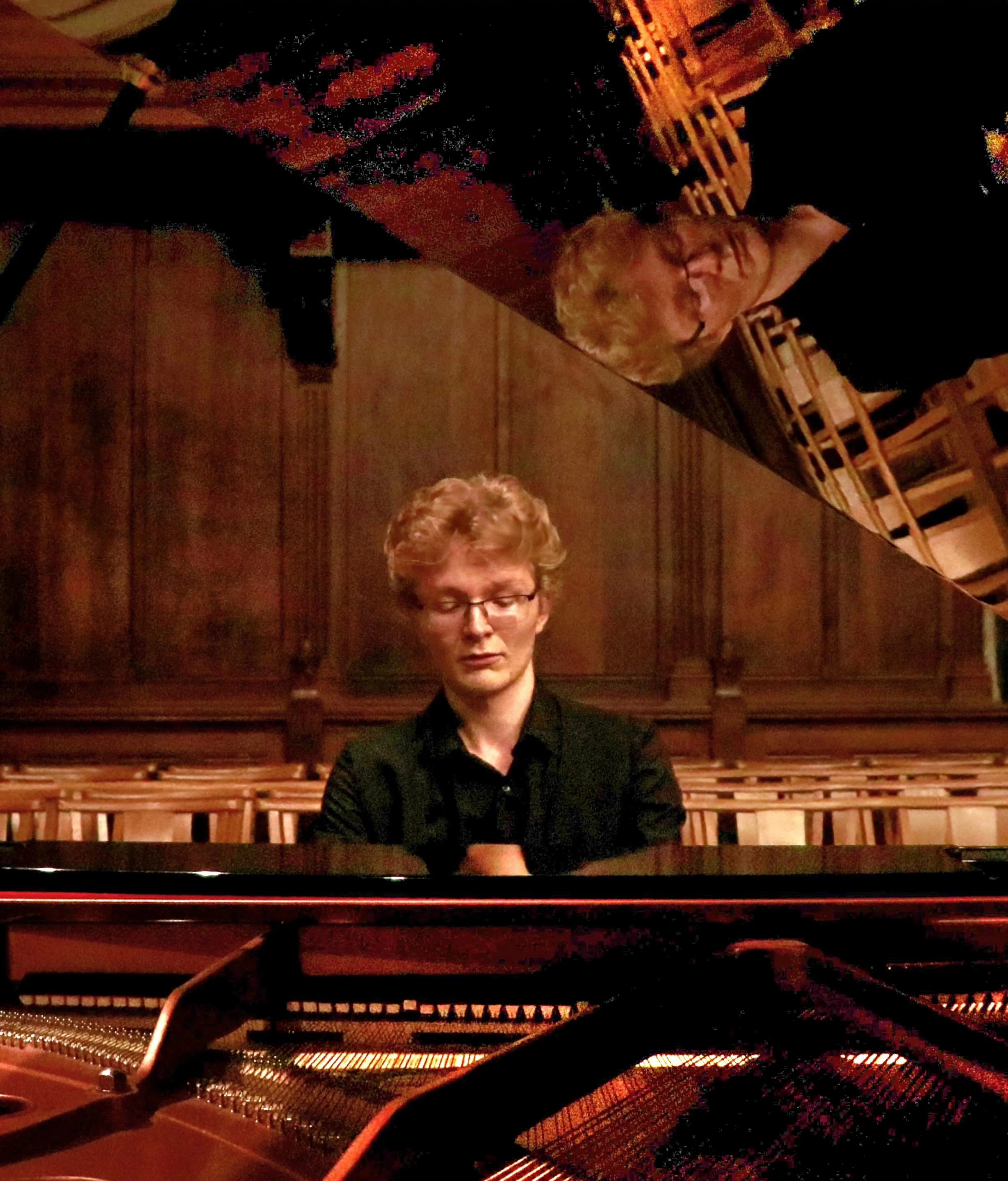
Joryan Pernollet
Piano
Joryan Pernollet, originally from Belley (France), began his musical training at the Belley Conservatory. He obtained his Brevet d'Études Musicales (Musical Studies Certificate) in 2013 in piano in Catherine Poncy's class. He continued his music studies at the Chambéry Regional Conservatory in Nathalie Petit-Rivière's class. In 2017, he joined the Conservatory of Lyon under Hervé Billaut and obtained his Diploma in Musical Studies the following year. In 2019, Joryan was admitted to the Haute École de Musique de Lausanne (HEMU, Switzerland), where he studied with Christian Favre for three years and […]
PROGRAM NOTES
W.A. Mozart (1759–1791)
Piano Quartet in G Minor, K. 478 (1785)
Mozart composed the Piano Quartet in G minor, K. 478, in 1785 during one of the most productive periods of his Viennese career. The work was commissioned by the publisher Franz Anton Hoffmeister as the first in a projected set of three piano quartets. At the time, the genre itself was relatively new. Chamber music that combined piano with violin, viola, and cello had not yet become common, and Mozart’s ambitious treatment of the ensemble proved more demanding than Hoffmeister had anticipated. After the publication of this first quartet sold slowly, the publisher released Mozart from the remainder of the contract. Today, the work stands as one of Mozart’s most striking chamber compositions.
The choice of G minor is significant. Mozart rarely used this key, reserving it for works of unusual emotional depth, including the Symphony No. 40 and the String Quintet in G minor. In this quartet, the darker character of the key shapes the expressive world of the entire first movement. Marked Allegro, the movement opens with a restless unison figure that immediately establishes a dramatic tone. Rather than treating the piano as a soloist accompanied by strings, Mozart distributes material carefully across the ensemble. The piano introduces much of the thematic material, yet the strings participate fully in the dialogue, often echoing or developing ideas introduced by the keyboard. The result is a texture that blends concerto-like brilliance with the intimacy of chamber music.
The second movement, Andante, shifts to the luminous key of B-flat major. Here Mozart writes in a more lyrical style, allowing the instruments to unfold long melodic lines over a gentle accompaniment. The movement reflects the vocal influence that permeates much of Mozart’s instrumental writing. The piano frequently sings in an operatic manner, while the strings provide a warm and balanced texture. Moments of subtle chromatic harmony briefly darken the atmosphere, but the overall tone remains poised and expressive.
The quartet concludes with a lively Rondo: Allegro. The principal theme is light and energetic, providing a welcome contrast to the intensity of the opening movement. Mozart’s writing highlights the agility of the piano while maintaining an active role for the strings. Episodes between returns of the main theme introduce contrasting ideas, including passages of playful imitation and sudden harmonic turns that briefly recall the dramatic character of the opening movement. In the end, the work closes with a sense of clarity and forward momentum.
Although the Piano Quartet in G minor initially puzzled its publisher, it has since become a cornerstone of the chamber repertoire. Mozart’s ability to balance virtuosic piano writing with genuine ensemble interaction helped define the piano quartet as a serious chamber genre. The work stands at a fascinating intersection between the Classical traditions of Haydn and the more expansive chamber writing that would emerge in the early nineteenth century.
Robert Schumann (1810–1856)
Piano Quintet in E-flat Major, Op. 44 (1842)
Robert Schumann composed the Piano Quartet in E-flat major, Op. 47, in 1842, a year often referred to as his “chamber music year.” During this remarkable period he produced a number of major chamber works, including the three String Quartets, the Piano Quintet in E-flat major, and the Piano Quartet. Schumann had spent much of the previous decade focused on piano music and song, but in 1842 he turned his attention to instrumental chamber genres with striking intensity.
The Piano Quartet reflects Schumann’s distinctive approach to ensemble writing. Rather than presenting the piano as a dominant solo voice, the work treats the four instruments as equal partners within a constantly shifting texture. The piece also reflects the close musical partnership between Schumann and his wife Clara, one of the leading pianists of the nineteenth century, who performed many of his works and helped bring them to wider audiences.
The first movement, Sostenuto assai – Allegro ma non troppo, begins with a slow introduction that establishes a broad and dignified character. The opening chords create a sense of anticipation before the Allegro begins with a sweeping theme introduced by the strings and piano together. Schumann develops his material through dense motivic work, frequently passing fragments of melody between the instruments. The movement balances lyrical passages with more dramatic surges, creating a sense of constant forward motion.
The second movement, Scherzo: Molto vivace, provides an energetic contrast. The principal idea is built on quick, sharply articulated figures that move rapidly through the ensemble. Two contrasting trio sections interrupt the driving momentum of the scherzo. These trios introduce smoother, more lyrical material before the return of the restless opening theme.
The slow movement, Andante cantabile, is among the most expressive moments in the work. A long, song-like melody unfolds over a gentle accompaniment, evoking the intimate character of Schumann’s lieder. The instruments gradually build toward a richer texture, and the movement culminates in a broad and powerful variation of the opening material before returning to a quieter conclusion.
The final movement, Finale: Vivace, brings the quartet to an energetic close. The movement is propelled by lively rhythms and bright thematic material, while moments of contrapuntal interplay demonstrate Schumann’s deep engagement with classical forms. Toward the end, Schumann recalls material from earlier in the work, creating a sense of unity across the entire composition.
Today the Piano Quartet in E-flat major stands alongside Schumann’s Piano Quintet as one of the central works of the Romantic chamber repertoire. Its blend of lyricism, structural imagination, and rich ensemble writing reflects Schumann’s remarkable creative surge in 1842 and his lasting contribution to the chamber music tradition.
Program Notes by Reginald Winters