
Baroque Brilliance
with Chloé Trevor - Violin
Saturday, January 23, 2027
7:30 – 9:30 PM
Boulder Adventist Church
Bahman Saless
Music Director
with
Chloé Trevor - Violin
Program
Heinrich Ignaz Franz Biber (1644–1704)
Battalia à 10 (1673)
I. Sonata
II. Die liederliche Gesellschaft von allerley Humor
III. Presto
IV. Der Mars (The March)
V. Presto
VI. Aria
VII. Die Schlacht (The Battle)
VIII. Adagio: Lamento der verwundeten Musquetirer
Johann Sebastian Bach (1685–1750)
Violin Concerto in D Minor, BWV 1052R (c. 1730)
I. Allegro
II. Adagio
III. Allegro
Chloé Trevor - Violin
About the Artists
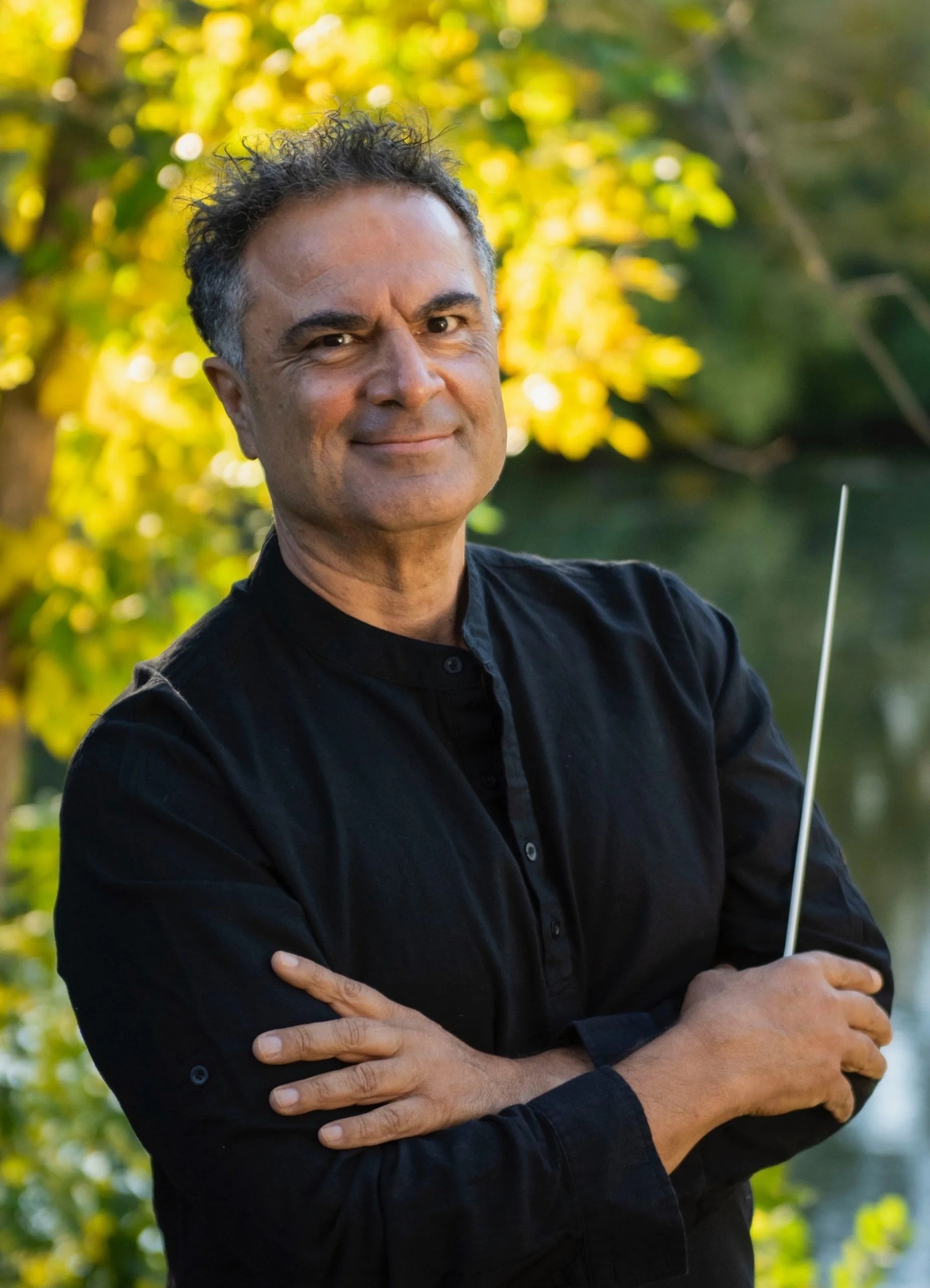
Bahman Saless
Music Director
A conductor for the 21st century, Bahman Saless has been described as “entrepreneurial, creative, and plugged in,” and “an innately talented musician and conductor, without frills or ego.” His passion is palpable, his enthusiasm contagious, and the results he draws from musicians are, as one colleague put it, “extraordinary.” Saless’s musical path is anything but conventional. After studying violin in England as a teenager and composing music from a young age, he pursued violin studies with Lyman Bodman at Michigan State University while […]
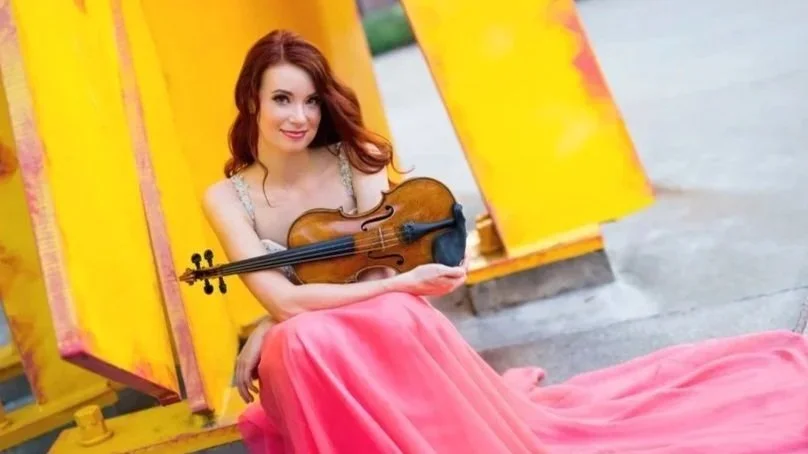
Chloé Trevor
Violin
Quickly becoming one of the most talked about and sought after musical ambassadors to Generation Z, violinist Chloé Trevor has combined her technical brilliance, spirit for classical music and her passion for mentoring the youth of today to connect with audiences in exciting and innovative ways. Silver medalist of the Ima Hogg Competition, critics have acclaimed Chloé for her “dazzling technique”, “excellent musicianship”, “huge tone”, “poise and professional grace”, and “bold personality unafraid to exult in music and ability”. […]
Program Notes
Heinrich Ignaz Franz Biber (1644–1704)
Battalia à 10 (1673)
Long before orchestral composers imitated cannon fire or twentieth-century modernists asked string players to strike, scrape, and disrupt the familiar beauty of their instruments, Heinrich Ignaz Franz Biber created Battalia. Written in 1673 for ten instrumental parts, this compact sequence depicts not only a battle, but the disorderly life surrounding it: soldiers gathering, singing, marching, fighting, and finally mourning their wounded. Its eight connected sections form a miniature drama whose audacity remains startling more than three centuries later.
Biber was one of the seventeenth century’s great violin virtuosos, and his understanding of string instruments extended far beyond conventional lyricism. In the opening Sonata, the players strike the strings with the wood of their bows, producing a dry, percussive sound now known as col legno. Elsewhere, notes are plucked sharply enough to snap against the fingerboard, while a sheet of paper may be placed beneath the bass strings to imitate the rattle of a military drum. These effects are not novelties added to the music. They are the music’s theatrical vocabulary.
The most extraordinary scene arrives in Die liederliche Gesellschaft von allerley Humor. Different popular songs are played simultaneously, each proceeding in its own key and meter. The result is a magnificent collision of melodies, representing soldiers attempting to sing their individual songs above the surrounding commotion. What may initially sound like musical chaos is, in fact, carefully organized: Biber uses dissonance and rhythmic disagreement to create the impression of communal disorder.
A vigorous Presto clears the confusion before Der Mars brings the troops into formation. The following movements pass through another burst of activity and a poised Aria before reaching Die Schlacht. Here, repeated notes, violent attacks, and snapping strings suggest the impact and confusion of combat without requiring a literal narrative for every gesture.
The closing lament changes the meaning of all that has preceded it. The wit and spectacle fall away, leaving sustained dissonances and descending lines that seem to bear the physical weight of exhaustion. Battalia may delight in its ingenious sounds, but it does not conclude with victory. Its final attention is reserved for the wounded. In this abrupt passage from entertainment to grief, Biber allows the human cost of battle to speak more powerfully than any triumphant march.
Johann Sebastian Bach (1685–1750)
Violin Concerto in D Minor, BWV 1052R (c. 1730)
The “R” attached to this concerto’s catalogue number carries an important meaning: reconstruction. No manuscript of a D Minor Violin Concerto by Bach survives. The music is preserved principally as the Harpsichord Concerto in D Minor, BWV 1052, and modern editors have worked backward from that score to create a plausible version for violin. The hypothesis of a lost violin original has inspired numerous reconstructions, although scholars continue to debate whether the music may instead have originated as a concerto for organ or another keyboard instrument. The work heard today is therefore not an archaeological certainty, but a compelling attempt to recover one possible earlier life of Bach’s music.
Whatever its original instrument, the concerto is among Bach’s most forceful creations. The first movement opens with the entire ensemble in a fierce unison statement. Its jagged rhythms and emphatic repetitions establish a musical argument that rarely relaxes. Rather than separating soloist and orchestra into neatly contrasting roles, Bach allows them to inhabit the same volatile material. The violin emerges from the ensemble, expands its gestures into extended passagework, and is repeatedly drawn back into the commanding orchestral refrain.
The effect is less a conversation than a sustained encounter between individual virtuosity and collective force. Sequential patterns climb through the harmony, phrases press beyond their expected boundaries, and the solo line demands both brilliance and stamina. Bach also reused music from the concerto’s first two movements in the cantata Wir müssen durch viel Trübsal, BWV 146, where the instrumental intensity became associated with struggle and tribulation.
The Adagio offers stillness without complete consolation. A persistent bass pattern moves beneath the movement, returning with the gravity of an unavoidable thought. Above it, the violin unfolds a long, ornamented meditation. The solo line appears free and searching, yet it remains bound to the repeated foundation below. The movement’s expressive power arises from this tension between constancy and freedom: the bass continues its measured course while the violin speaks with an almost vocal immediacy.
The final Allegro restores the uncompromising energy of the opening. Its ritornello returns throughout the movement as a structural anchor, while the soloist launches into rapid figuration, string crossings, and sharply articulated rhythmic patterns. Moments of expansion are quickly gathered back into the music’s relentless motion.
In reconstructed form, the concerto occupies a fascinating space between scholarship and performance. We may not know precisely which instrument Bach first imagined, but the violin reveals qualities already embedded within the music: its tensile energy, its capacity for sustained line, and its ability to move instantly between lyrical expression and dazzling attack. What survives is not a fragmentary curiosity, but a complete and formidable musical argument.
Program Notes by Reginald Winters